Introduction
A mesh silicone mat is a reusable silicone-coated fiberglass mesh used for airflow thermal processing, process drying, non-stick tray lining and process-processing support. Its open grid lets heated or circulating air reach the product while the silicone coating provides flexibility, release performance and a washable surface.
Commercial bakeries, process factories, wholesalers, OEM buyers and equipment manufacturers can order mesh silicone mats by tray size, shape, mesh opening, border design, color and packing method. The best specification depends on the actual process—not simply the outside dimensions.
What Is Mesh Silicone Mat?
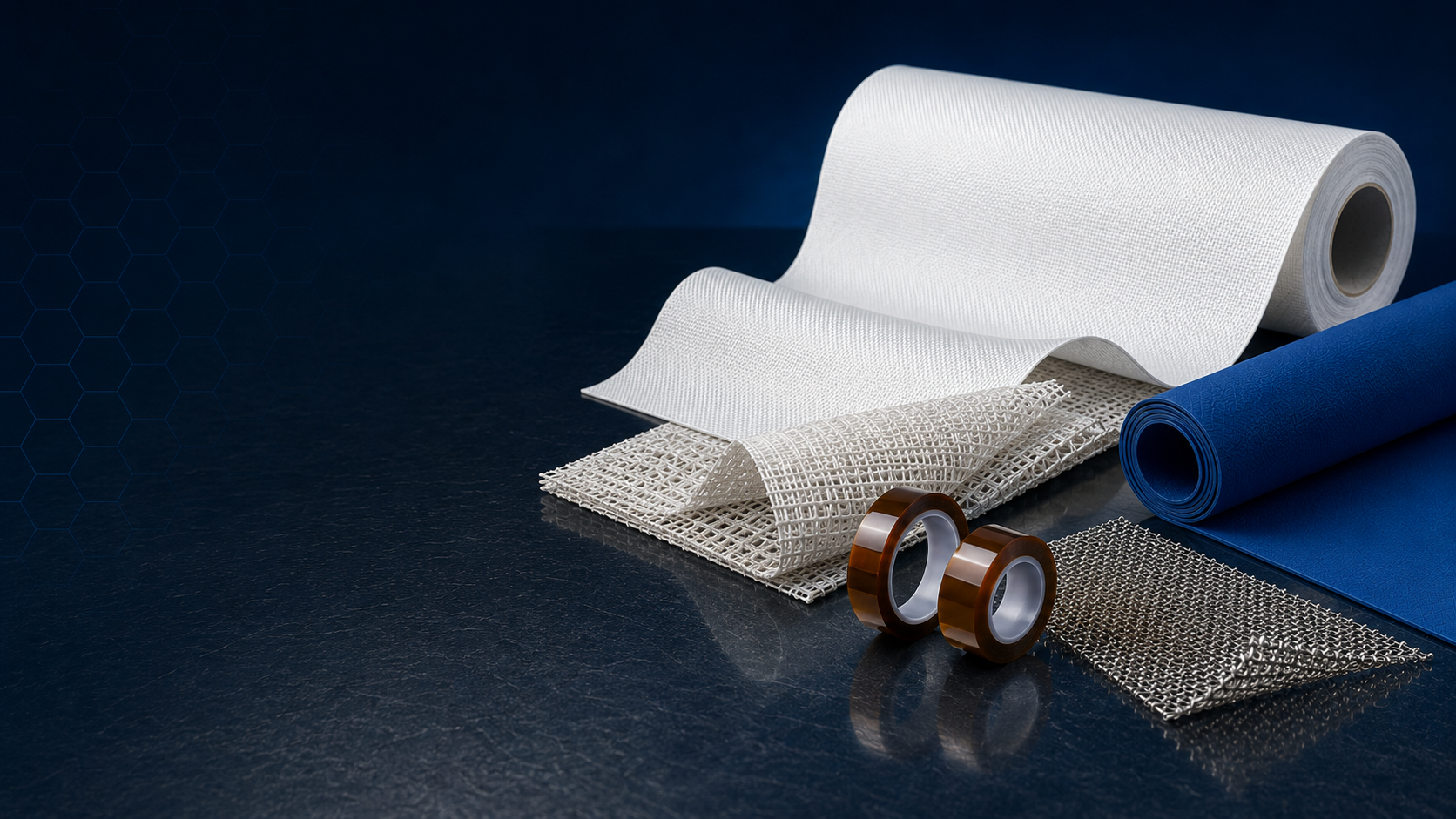
Mesh silicone mat is normally made from an open fiberglass mesh coated with silicone. The fiberglass base helps the mat remain dimensionally stable, while the silicone coating creates a flexible non-stick surface. A solid silicone border may be added around the mesh to improve handling and reduce fraying during repeated loading, cleaning and storage.
Unlike a closed sheet, the open structure allows airflow through the mat. This makes it useful when a process needs ventilation, moisture release or more direct heat circulation.
Common Applications
thermal-processing facility Trays
Mesh mats are used beneath bread, pastry, cookies and other baked products where airflow and easy release are important. Custom dimensions can be matched to sheet pans, oven trays and production racks.
process Drying and Dehydration
The open grid supports airflow around fruit, vegetables, confectionery and other products on dehydrator shelves or drying racks. Mesh opening and product size should be considered together.
Freezing and Cooling Trays
Flexible mesh mats can serve as reusable release liners during selected cooling or freezing processes. Buyers should state minimum and maximum working temperatures and the cleaning cycle.
process-Processing Equipment
Custom-cut mats can line racks, support product transfer or fit non-standard equipment surfaces. Drawings and equipment photos help confirm clearances, corners and border widths.
OEM and Wholesale Supply
Wholesalers and private-label brands can specify color, logo position, SKU packaging, carton quantities and repeat-order requirements.
Key Features
Suitability for direct process contact and the declared working-temperature range should be confirmed for the intended market and process before ordering.
- Open mesh construction for airflow, drying and heat circulation
- Fiberglass reinforcement for dimensional stability
- Flexible silicone-coated surface with non-stick release performance
- Reusable and washable construction
- Optional reinforced border for repeated handling
- Custom cutting for trays, racks and equipment
- Rectangle, round, rounded-corner and die-cut formats
- Bulk, private-label and OEM packing options
Material Comparison
| Option | Structure | Typical Use | Buying Note |
|---|---|---|---|
| Silicone mesh mat | Silicone-coated fiberglass open mesh | heated equipment trays, drying and airflow thermal processing | Confirm mesh opening, border width and tray fit |
| Solid silicone mat | Solid silicone or silicone-coated fabric | Dough handling, tray lining and surface protection | Choose when airflow through the mat is not needed |
| PTFE mesh mat | PTFE-coated fiberglass mesh | High-release drying and conveyor applications | Compare release, temperature, flexibility and cleaning requirements |
| Custom die-cut mesh mat | Silicone mesh with a custom outline or border | OEM equipment and special trays | Provide a dimensioned drawing and tolerance |
Choosing a Specification
1. Confirm Airflow Requirements
Choose open mesh when air, heat or moisture must pass through the liner. A solid mat is better for flat work-surface protection or liquid containment.
2. Measure the Tray or Equipment
Provide finished length and width, required clearance, corner radius and tolerance. For a non-standard shape, attach a dimensioned drawing or sample photo.
3. Define Mesh and Thickness
State the requested mesh opening or share the product being processed so support and airflow needs can be reviewed. Confirm total thickness when equipment clearance matters.
4. State the Temperature Cycle
Provide continuous temperature, peak temperature, cycle duration, cooling or freezing temperature and contact media.
5. Select the Edge Design
Confirm border width, color, corner shape and whether the edge will be repeatedly folded, washed or pulled from hot trays.
Customization Options
Custom color, logo, shape and retail packaging can affect MOQ and lead time. A pre-production sample is the safest way to approve dimensions, edge quality, surface feel and packing before mass production.
| Custom Item | Available Choices |
|---|---|
| Size | Standard sheet, roll, custom tray size or equipment-liner size |
| Shape | Rectangle, square, round, oval, rounded corner or die-cut outline |
| Material | Silicone-coated fiberglass mesh, reinforced silicone mesh or alternative PTFE construction |
| Color | White, black, brown, colored border or custom border color subject to MOQ |
| Edge finish | Reinforced border, sealed edge, sewn edge or wider handling border |
| Logo | Corner logo, private-label mark or single-color marking subject to quantity |
| Packaging | Bulk pack, individual bag, paper sleeve, carton or OEM packaging |
B2B Buying Considerations
Check Fit and Tolerance
An oversized mat may curl or interfere with loading; an undersized mat may leave the tray exposed. Confirm usable tray dimensions rather than relying only on a nominal tray name.
Describe Cleaning and Product Contact
State washing frequency, detergent, oil exposure, abrasion and whether the mat contacts process directly.
Approve Samples Before Production
Evaluate sample flatness, mesh uniformity, border adhesion, corner consistency, release performance and fit in the real process.
Plan Repeat Orders
For wholesale and factory supply, agree on SKU naming, packaging, carton labels and retained specifications.
RFQ Guide
For an accurate mesh silicone mat quotation, prepare the following information:
| RFQ Item | Information to Provide |
|---|---|
| Finished size | Length, width, thickness, corner radius and tolerance |
| Mesh | Mesh opening or reference sample/photo |
| Border | Width, color and edge finish |
| Application | thermal processing, drying, cooling, conveyor or equipment use |
| Working conditions | Continuous and peak temperature, cleaning and contact media |
| Quantity | Sample quantity, first bulk order and estimated annual demand |
| Custom requirements | Logo, shape, color, barcode or private-label packaging |
| Delivery | Destination country or port and target schedule |
FAQ
Can mesh silicone mat be custom cut for heated equipment trays?
Yes. Mesh silicone mats can be cut to custom tray sizes with reinforced borders, rounded corners or special shapes based on buyer drawings or sample photos.
What information should I provide for a mesh silicone mat RFQ?
Please provide size, mesh style, border width, thickness, quantity, application, working temperature, color, packaging request and destination country.
Can I request samples before a bulk order?
Yes. A sample is recommended before bulk production, especially for a custom size, border color, shape, logo or OEM packaging.
What is the MOQ for custom mesh silicone mats?
MOQ depends on size, color, edge finish, logo and packaging. Standard constructions usually support smaller trial orders than fully customized designs.
Is mesh silicone mat suitable for process drying and airflow thermal processing?
Yes. The open mesh structure allows airflow and is commonly used for heated equipment trays, drying racks, dehydrators and process-processing support surfaces.
Can the border color or logo be customized?
Border color, logo marking and packaging can be customized depending on order quantity and production requirements.