The short answer
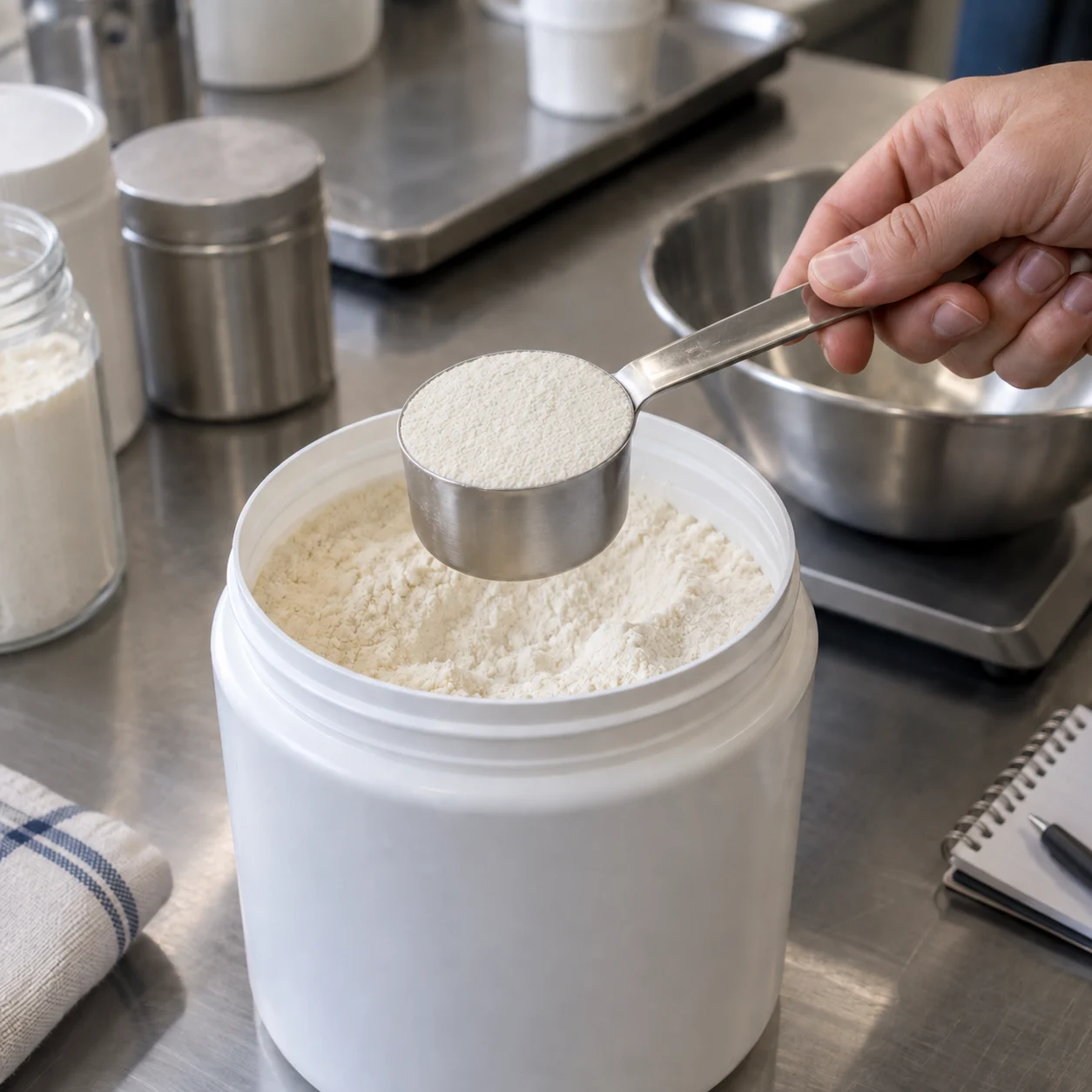
Start with the amount of powder you need per fill, then test that powder in a scoop of known volume. Choose the bowl and handle for the opening you work through, and choose the material for the cleaning and packing routine. A scoop marked 5 mL delivers 5 mL of space; it does not guarantee 5 g of every powder.
For an operator filling many packs, a repeatable leveling method matters as much as the stamped capacity. For a scoop placed inside each pack, unit cost, handle length and individual packing matter more than a polished finish.
Why mL and g cannot be used interchangeably
Millilitres describe the volume of the scoop bowl. Grams describe the mass of the powder in that bowl. The relationship is fill weight = scoop volume × the powder's measured bulk density. As a simple example, a 10 mL scoop filled with a powder whose measured bulk density is 0.6 g/mL holds about 6 g when filled the same way each time. That number is an illustration, not a specification for any particular powder.
Powder can settle, absorb moisture or trap air. A heaped scoop, a level scoop and a tapped scoop can therefore give different weights even when the tool is unchanged. If the finished pack has a weight requirement, check the portion on a scale using the actual powder and an agreed filling method.
Choose the scoop format for the job
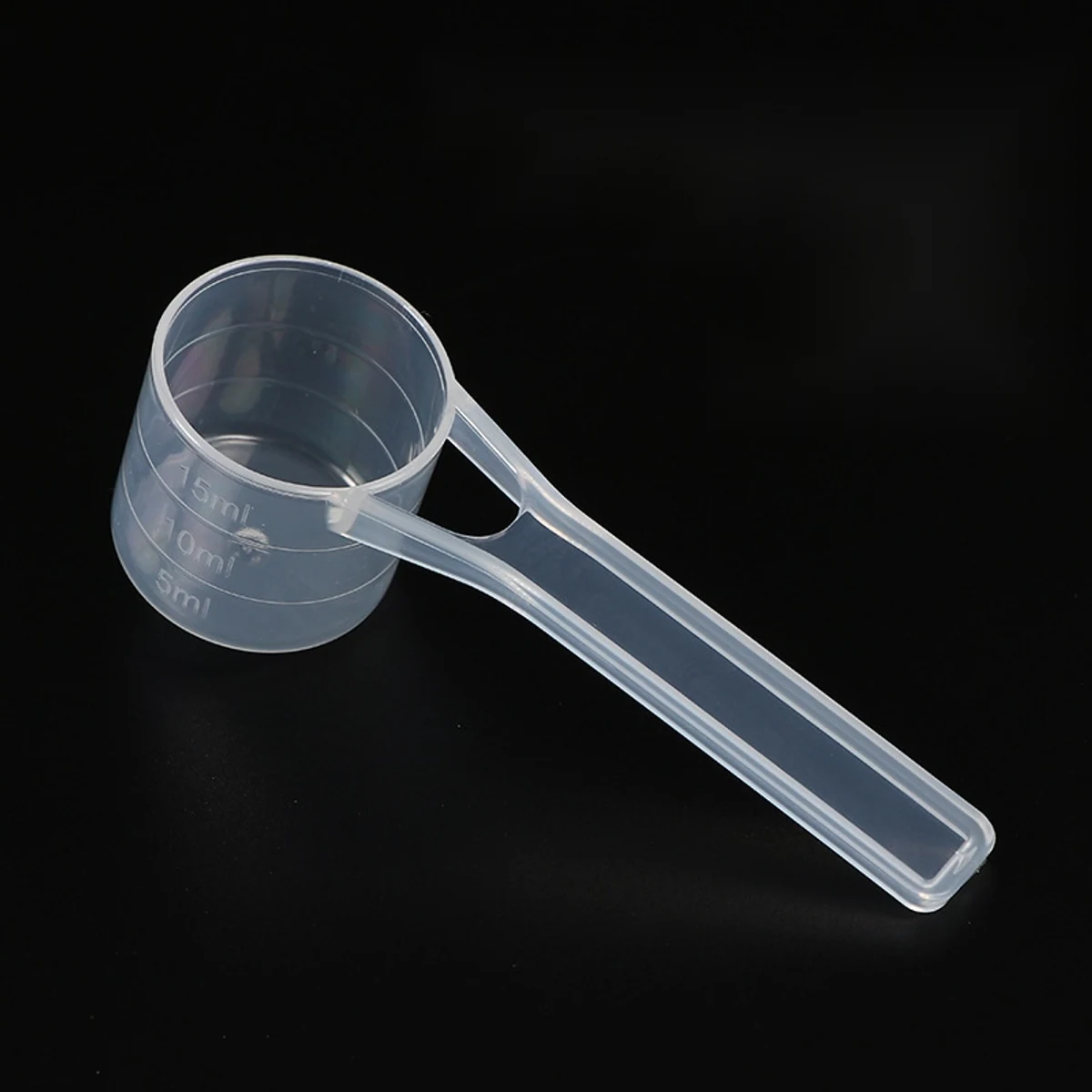
Capacity is only one dimension. The bowl must enter the container cleanly, release the powder where it needs to go and remain comfortable over the expected number of fills. These are practical starting points for comparing the current range.
Bowl shape and handle reach
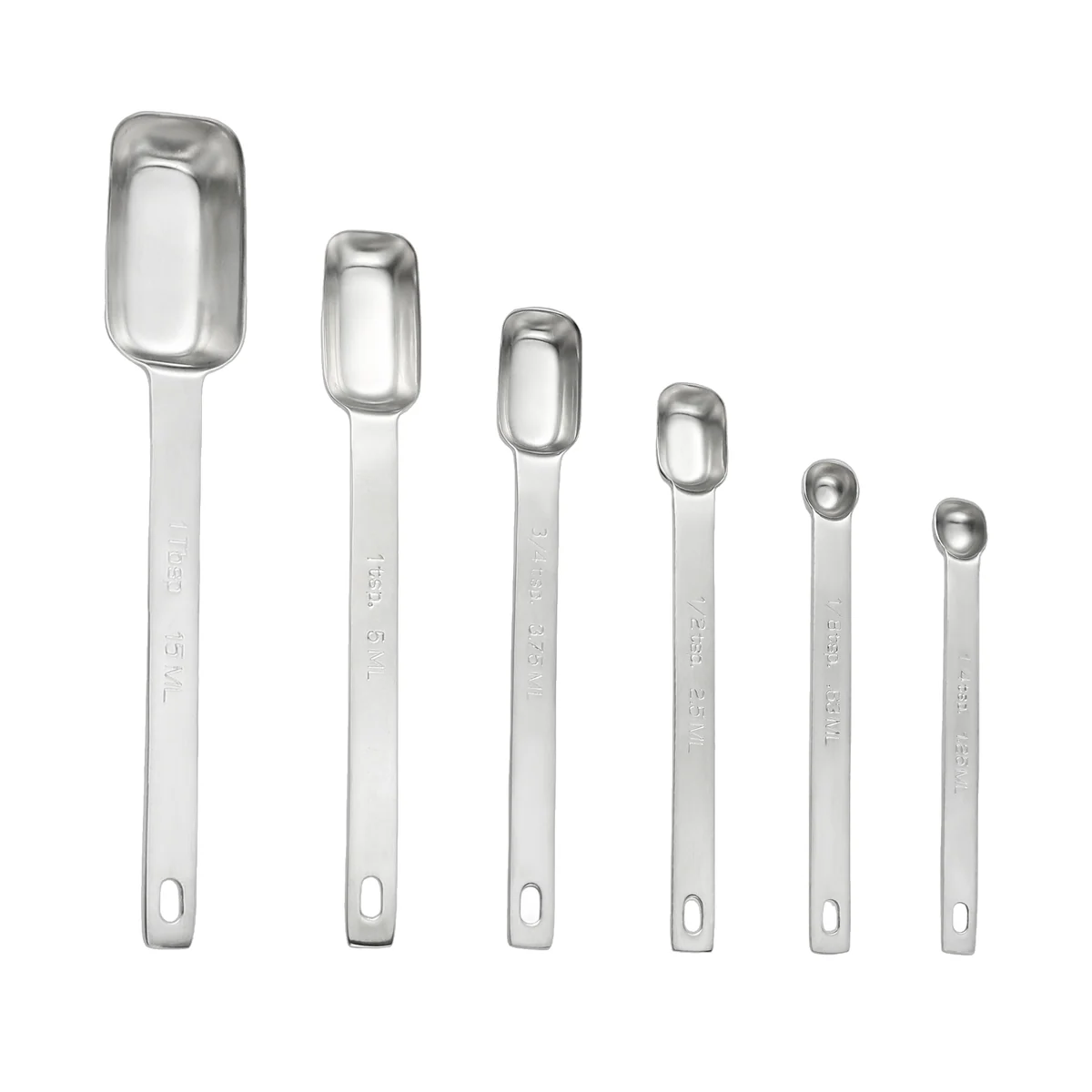
A narrow rectangular bowl reaches through a small opening and presents a straight rim for leveling. A deeper round bowl carries a larger portion with less spillage on the trip to the receiving pack. A longer handle keeps the operator's hand away from a deep container and helps retrieve powder near the bottom.
Metal or plastic
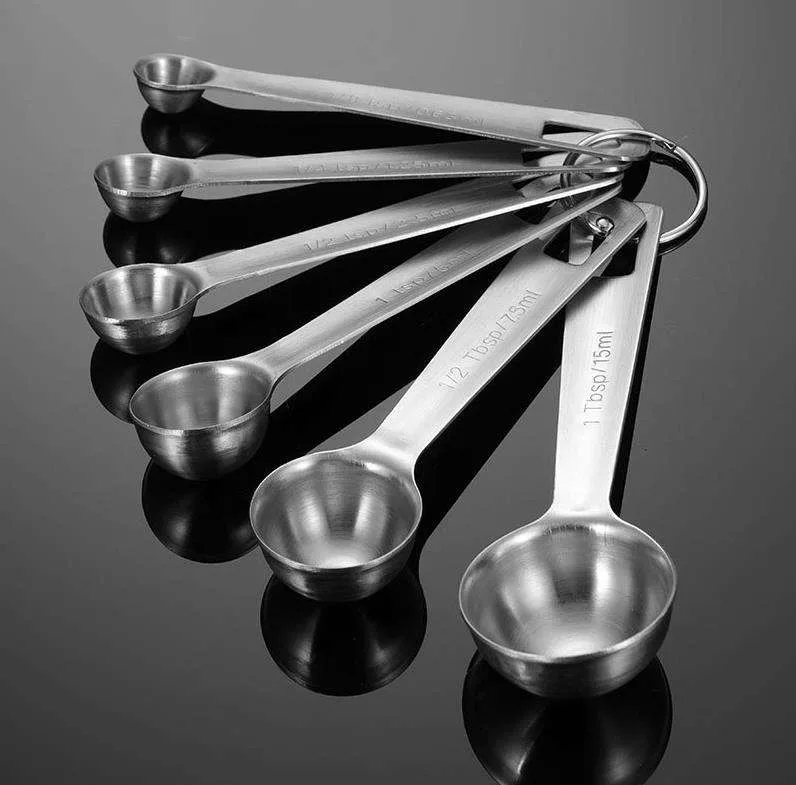
Stainless steel suits a reusable tool that will be washed between jobs. Molded PP or PE suits lightweight, high-volume pack inserts and applications where a dedicated scoop stays with the product. Specify the resin grade, required contact conditions and cleaning or single-use plan; a material name alone is not a finished-product approval.
| Working need | Practical starting point | Check before ordering |
|---|---|---|
| Tiny portions or in-pack scoops | Small molded plastic scoop | Confirm the actual filled weight, resin and pack format |
| Reusable bench dosing | 304 stainless measuring spoon or single-size scoop | Check capacity marks, cleaning method and handle reach |
| Narrow jar or pouch opening | Slim rectangular bowl | Measure the opening and allow room to level the scoop |
| Larger visible portions | Graduated PP cup scoop | Check graduation interval and whether the powder is easy to read through the wall |
Run a short fill trial before fixing the size
Use the real powder, the intended container and the person or process that will fill it. First decide whether the scoop will be level, gently settled or used with another defined technique. Weigh several consecutive fills with that same method. Record the average and the spread, then compare both with the acceptable range for the finished pack.
If the result drifts, check the powder condition and operator method before changing the nominal capacity. Once a size works, retain the fill method and reference sample with the purchase specification so repeat orders are compared on the same basis.
What to send with a scoop RFQ
A target gram weight without powder data is not enough to fix a scoop size. A short, specific request gets to a useful sample faster.
- Powder name or sample, measured bulk density if available, and target weight per fill
- Fill style: level, heaped or settled, plus the acceptable weight range
- Container opening, reach depth and destination pack opening
- Preferred material, required contact conditions and cleaning or single-use routine
- Estimated order quantity, packing format, markings and any color or logo requirement
See the matching scoop formats
Compare the formats against your fill trial, then ask for a sample of the likely size.
- Plastic micro measuring scoops for very small portions and pack inserts
- 304 stainless measuring spoon sets for reusable bench dosing
- Narrow square stainless scoops for tighter openings
- Graduated PP scoops for larger visible volumes
FAQ
How many grams are in a 5 mL powder scoop?
There is no single gram value. Weigh a level 5 mL scoop of the actual powder, or multiply 5 mL by that powder's measured bulk density in g/mL for an estimate. Check repeated fills before using the result as a packing target.
Which scoop is better for a narrow container opening?
Start with a narrow rectangular bowl and check the full bowl width against the opening. Leave enough clearance to enter and withdraw the scoop without scraping off the powder.
Should I use a stainless steel or plastic scoop?
Choose stainless steel for a reusable, washable bench tool. Choose molded plastic when a light scoop will be packed with each product or a dedicated tool is needed for each batch. Confirm the ordered material grade and intended contact conditions.
Can a measuring scoop replace a scale for a weight-controlled pack?
A scoop helps operators portion consistently after a fill trial, but it measures volume rather than mass. Use a scale to establish and periodically check the actual fill weight when pack weight is controlled.